Travel Tech Packing for India Trips and International Flights
Pack a streamlined, reliable tech kit for domestic and international travel. Compare multi-port GaN chargers, universal plug adapters, and airline battery compliance rules.

Maintained by FindsRadar Editorial Team
Air India Spare Batteries
Up to 100 Wh Each
Maximum two; individually protected; cabin only, not overhead bins
Charger Consolidation
Check Compatibility
Compare device requirements and per-port output before replacing separate chargers
Destination Sockets
Check Each Country
Match the adapter to the socket, appliance voltage and any required earth connection
Air India Mandate
Cabin Baggage Only
Power banks strictly prohibited in checked aircraft cargo
Make a Device and Cable List Before Packing
A reliable travel tech kit covers every essential device without filling half your backpack with redundant power bricks. Start by listing what you actually travel with: smartphone, laptop, wireless earbuds, and smartwatch.
A compatible multi-port charger may reduce the number of power adapters you pack. A 65W label does not guarantee enough power for every laptop and phone combination: check the manufacturer’s output for the specific ports used together, each device’s charging requirements and cable ratings. Any weight saving depends on the equipment you replace; this guide does not report a measured weight comparison.
As one model-specific example, Anker lists 45W + 18W across the two USB-C ports of its 615 power strip, versus up to 65W using one USB-C port. That illustrates why you must check the exact model’s shared-output table; it is not a recommendation to use that power strip for travel.
Universal Plug Adapters: Pin Compatibility vs Voltage
A travel adapter changes plug-pin compatibility; it does not convert voltage or frequency. Check the destination’s socket type, the appliance’s input-voltage and frequency range, the adapter’s load rating and whether it supports any required earth connection. A “universal” label is not proof that every plug, appliance or destination is supported.
Do not use an adapter to compensate for a loose or damaged hotel socket. Stop using a socket that cannot hold the plug securely, and report the problem to hotel staff or the operator. Never force an adapter into a socket; avoid damaged fittings or signs of overheating. Use a suitable, undamaged outlet instead.
- Electrical Safety First: travel adaptor compatibility and ratings
- Electrical Safety First: electrical safety for travellers
| Travel Item | Primary Benefit | Crucial Safety Check | Packing Location |
|---|---|---|---|
| All-in-One Universal Adapter | Adapts compatible plug shapes for supported destination sockets | Check socket type, voltage, load rating and required earth connection | Cabin bag personal item |
| 65W GaN Multi-Port Charger | May charge multiple compatible devices within its shared power budget | Verify per-port power split under concurrent load | Tech organizer pouch |
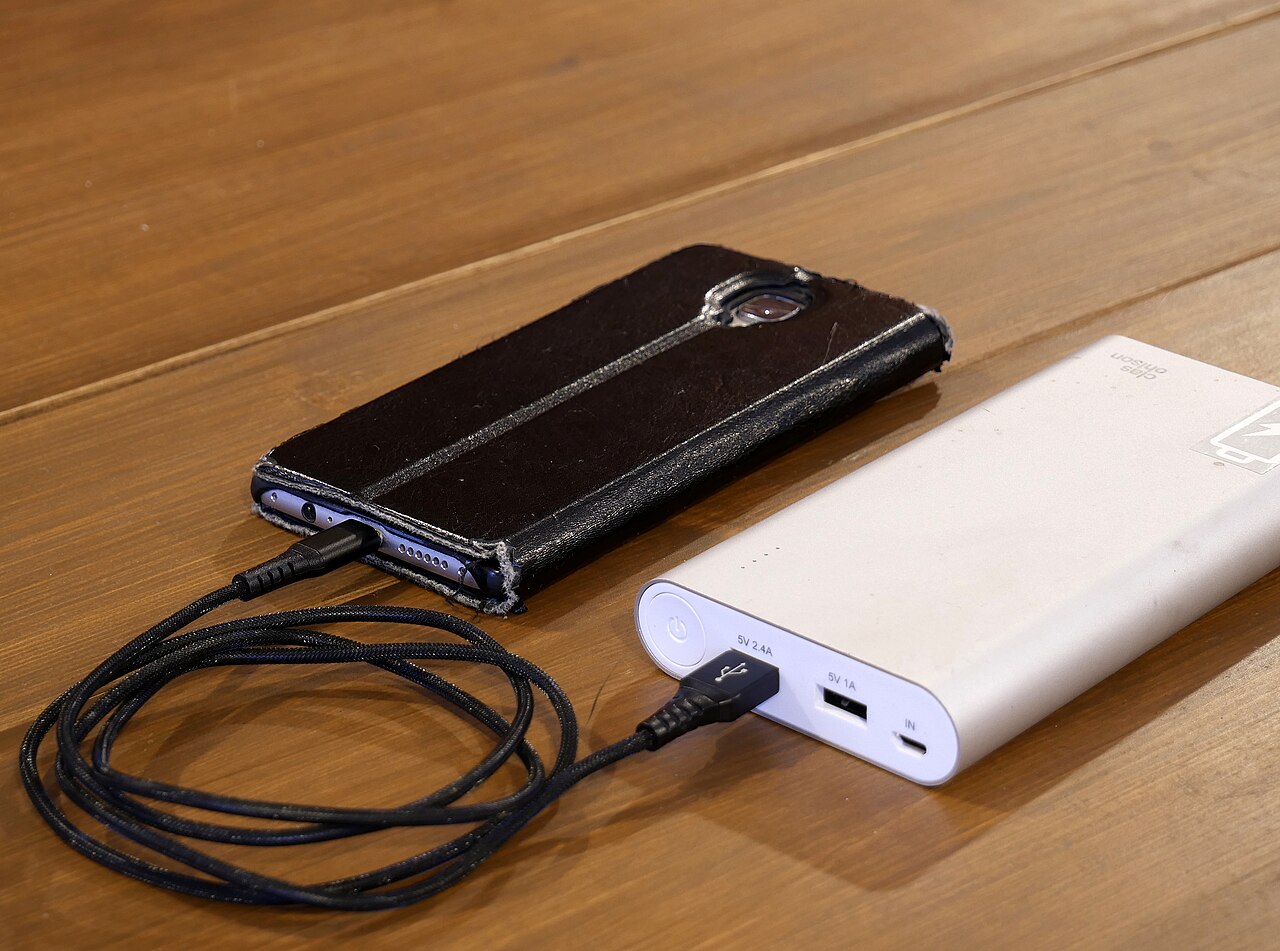
| 10,000 mAh Power Bank (37 Wh at 3.7 V) | Keeps phone active through long flight delays and transit | Check nominal battery voltage, Wh rating and airline acceptance | Cabin only; follow airline storage restrictions |
| Structured Cable Pouch | Prevents tangled cords during airport security checks | Keeps backup cables accessible without unpacking clothes | Top pocket of carry-on backpack |
Travel Tech Checklist: Cabin Baggage vs Cargo Rules
Check the Operating Airline’s Battery Rules
Air India limits spare batteries to 100 Wh each and two per person, individually protected against short circuits. Power banks and spare batteries belong in cabin baggage, not checked baggage or overhead bins. Check every operating airline and departure point on your itinerary: for Singapore departures, Air India also prohibits onboard use or charging of power banks.
The FAA’s US guidance permits lithium-ion batteries up to 100 Wh; 101–160 Wh requires air-carrier approval, with a maximum of two spare batteries. Airlines can impose stricter capacity and quantity limits. This US baseline does not override Air India’s policy or other route-specific restrictions.
Capacity in mAh alone does not establish watt-hours. Wh = mAh × nominal battery voltage ÷ 1,000: 10,000 mAh at 3.7 V equals 37 Wh, not less than 37 Wh. Use the manufacturer’s rating; FAA guidance allows calculation when Wh is not marked, but confirm documentation and acceptance with your airline before travel.
Final Assessment & Recommendation
Consolidate compatible devices onto a suitable charger and pack cables together. Before flying, check your power bank’s Wh rating and every operating airline’s capacity, quantity, protection and cabin-storage rules; a packing checklist does not guarantee airport acceptance.
What We Liked
- May reduce duplicate chargers when device and port requirements match
- Keeps cables grouped for packing and inspection
- Prompts checks of flight-specific battery capacity, quantity, protection and storage rules
Things to Consider
- Travel adapters change physical plug geometry but do not convert 110V to 220V electricity
Frequently Asked Questions
Editorial answers to common questions. Check the cited sources, applicable region and publication date before relying on product or policy details.
Sources & image credits
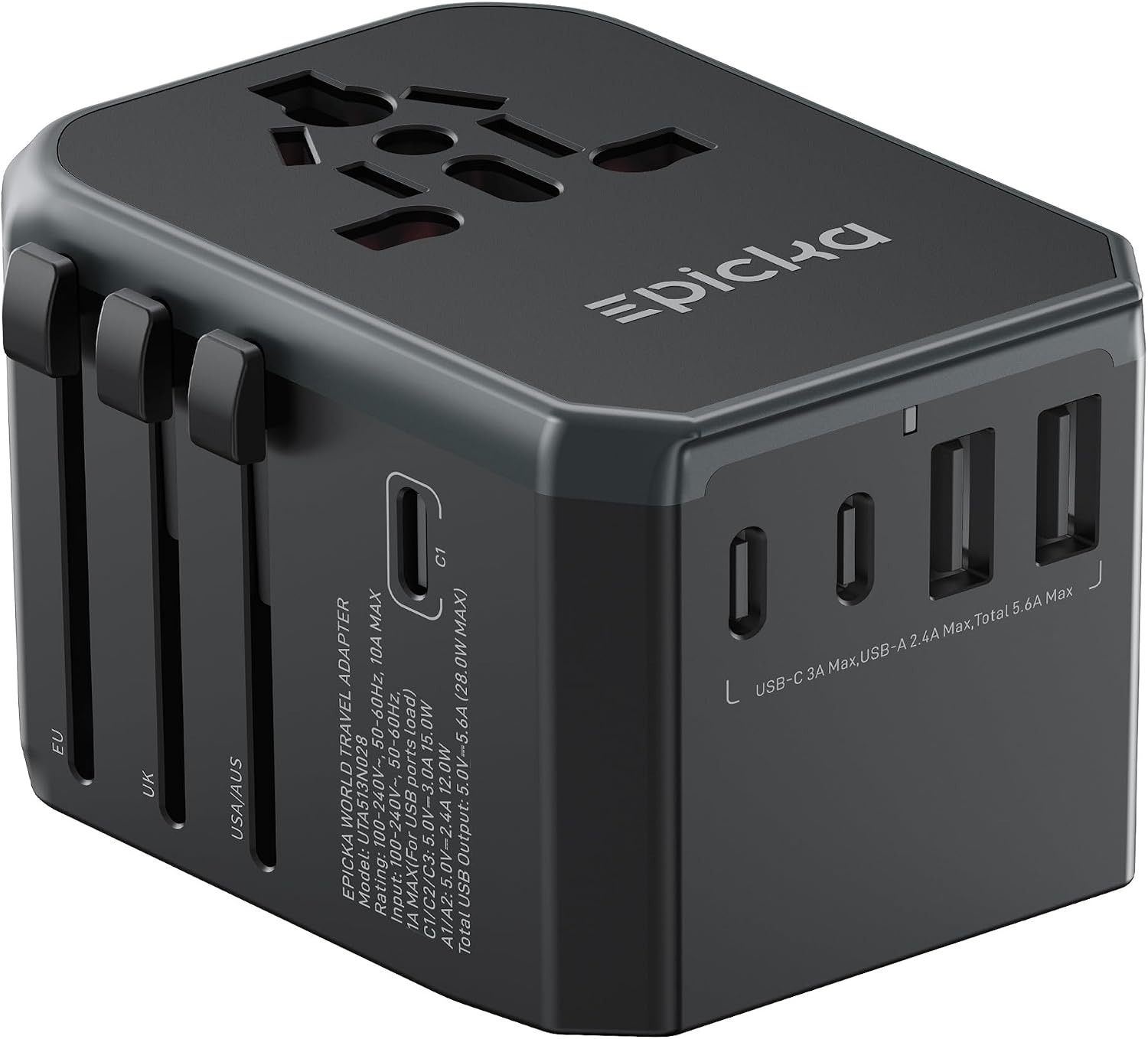
EPICKA TA-105+ travel plug adapter, grey — Amazon source product image; category example, not a voltage converter or travel approval. The source housing prints UTA513N028; its equivalence to the selected marketing model is not established. Not the older TA-105, universal destination compatibility, India socket support or safety testing.
Image: Source product image via Amazon.com / EPICKA TA-105+ — selected Amazon.com image source. Original selected retail product imagery, unmodified and full frame. Owner-attested Amazon-image reuse rights; not independently documented camera photography or FindsRadar hands-on specimens.
- Air India: Unsafe and Restricted ItemsChecked
- FAA: Airline Passengers and Batteries (US guidance)Checked
- Anker 615: manufacturer output specifications (model-specific example)Checked
- Electrical Safety First: travel adaptor compatibility and ratingsChecked
- Electrical Safety First: electrical safety for travellersChecked