How Much More Are Indians Paying for Tech Gadgets Than the Rest of the World?
From flagship phones and gaming mice to smart desk accessories, we broke down the exact retail prices, 18% GST, and customs duties across India, the US, Dubai, and Canada.

Anshuman Roy
Flagship Price Gap
₹43,750+
Average premium on imported flagships vs US
Effective Tax Burden
38.2%
BCD 15% + SWS 10% + Cascading 18% GST
Currency Buffer
6%–8%
Hedging against Rupee-Dollar volatility
Budget 2024 Relief
-5% BCD
Tariff reduction on CBU smartphone imports
The Global Tech Pricing Reality: Keynote Delusion vs Retail Truth
Every September and October, millions of Indian technology enthusiasts tune into global launch events from Cupertino, Seoul, and Mountain View. Keynote presentations proudly flash introductory retail numbers: "$999", "$1,199", or "$1,599". In theory, at an exchange rate of roughly ₹83 to ₹85 per US dollar, an American $999 device should cost around ₹83,000 to ₹85,000 in India.
Yet, the moment local Indian pricing appears on authorized retail portals, a collective sticker shock ripples through the tech community. That same $999 device is stamped with a retail price of ₹1,29,900. On top-tier flagship configurations, such as the 1TB iPhone 16 Pro Max or enthusiast gaming laptops, the price gap balloons well beyond ₹50,000 to ₹75,000—enough to purchase a high-end OLED television or a vacation flight to Southeast Asia.
Whether it is the newest flagship smartphone, hot-swappable gasket mechanical gaming keyboards, high-capacity GaN 65W charging hubs, or active noise-canceling headphones, Indian consumers consistently pay the highest import premiums on earth. But where does this massive disparity originate, and can shoppers realistically avoid it?
Cross-Country Tech Price Parity Matrix (2026)
To map out the exact financial disparity, our editorial lab audited identical hardware models across five primary consumer markets: India, the United States, Canada, Malaysia, and the United Arab Emirates (Dubai). The numbers below represent baseline retail pricing normalized to Indian Rupees (INR) at current interbank exchange rates.
| Hardware Device | India (INR) | USA (USD -> INR) | Dubai (AED -> INR) | Canada (CAD -> INR) | Indian Premium |
|---|---|---|---|---|---|
| Apple iPhone 16 Pro Max (256GB) | ₹1,44,900 | $1,199 (₹1,01,900) | AED 5,099 (₹1,15,500) | CAD 1,749 (₹1,07,200) | +₹43,000 (+42%) |
| Apple Mac Mini (M4 Pro / 24GB) | ₹1,49,900 | $1,399 (₹1,18,900) | AED 5,899 (₹1,33,600) | CAD 1,999 (₹1,22,500) | +₹31,000 (+26%) |
| Sony WH-1000XM5 ANC Headphones | ₹31,990 | $348 (₹29,500) | AED 1,299 (₹29,400) | CAD 449 (₹27,500) | +₹2,490 (+8%) |
| Logitech G Pro X Superlight 2 Mouse | ₹15,995 | $159 (₹13,500) | AED 599 (₹13,600) | CAD 219 (₹13,400) | +₹2,495 (+18%) |
| Keychron Q3 Max Mechanical Keyboard | ₹21,999 | $214 (₹18,190) | AED 849 (₹19,200) | CAD 299 (₹18,300) | +₹3,809 (+21%) |
2026 Global Price Parity Audit: Identical Flagship Hardware Across 5 Major Consumer Markets
The Assembly Paradox
Notice that while assembled-in-India products like standard iPhones have seen their price gap shrink slightly to 15%–20%, imported "Pro" tiers, Mac Minis, and niche enthusiast hardware still carry an astonishing 25% to 42% Indian surcharge.
The Anatomy of an Indian Tech Tax Bill: Why Hardware Costs More
There is a widespread misconception that global manufacturers arbitrarily mark up prices in developing economies out of corporate greed. In reality, product managers at multinational tech brands operate under complex regulatory, fiscal, and foreign-exchange parameters unique to the Indian market:
First is the Completely Built Unit (CBU) Customs Duty. Any finished consumer electronic imported ready-to-sell into India falls under specific HSN tariff codes (such as HSN 8517.13.00 for smartphones). In the Union Budget 2024, the Indian government reduced Basic Customs Duty (BCD) on imported smartphones from 20% to 15% to stimulate competitive retail pricing. However, an additional 10% Social Welfare Surcharge (SWS) is levied directly on the BCD.
Second is the Cascading 18% Goods & Services Tax (GST). Crucially, in Indian customs valuation, 18% GST is not levied on the base manufacturing cost; it is calculated on the cumulative Assessable Value (Product Cost + International Freight + BCD + SWS). This cascading formula means taxes are paid on top of previous taxes, inflating the landed fiscal burden above 38.2% before the importer even factors in domestic shipping or distributor margins.
Third is the Maximum Retail Price (MRP) Foreign-Exchange Hedge. Under the Legal Metrology Act in India, every retail item must display a fixed, immutable MRP that cannot be increased once stamped on the packaging. Because the Indian Rupee historically fluctuates between 2% and 5% annually against the US Dollar, brands bake an upfront 6% to 8% currency-hedging buffer into the launch MRP to safeguard their margins against sudden currency devaluations.
- HSN 8517 Basic Customs Duty (BCD): 15% on non-locally assembled flagship electronics.
- Social Welfare Surcharge (SWS): 10% surcharge levied on the aggregate BCD duty amount.
- Compounding 18% GST: Levied on the landed, duty-paid sum, creating a cascading tax rate exceeding 38%.
- Legal Metrology MRP Mandate: Importers cannot alter prices post-packaging, necessitating an upfront 6%–8% currency cushion.
- Authorized Service Network Surcharge: Indian statutory warranty compliance requires local warehousing of replacement parts for 3 to 5 years, adding 3%–5% operational overhead.
The "Friend in Dubai or US" Trap: Is It Really Worth Smuggling?
Faced with a ₹43,000 price gap, thousands of Indian consumers ask relatives traveling from Dubai, Singapore, or the United States to bring hardware back in their personal luggage. While this has been a popular loophole for decades, modern customs enforcement and global hardware differences make this practice increasingly fraught with risk.
Under Rule 3 of the Baggage Rules (2016) issued by the Central Board of Indirect Taxes and Customs (CBIC), an Indian resident returning from overseas is permitted to bring duty-free goods up to ₹50,000 in total value, plus one personal used laptop. Brand-new electronics still sealed in retail packaging with commercial tags are frequently intercepted at Mumbai (BOM), Delhi (DEL), and Bengaluru (BLR) international airports, resulting in confiscation or a mandatory 38.5% customs redemption fine.
Furthermore, hardware compatibility is no longer universal. US-spec iPhone models sold since the iPhone 14 series lack a physical SIM tray entirely, relying exclusively on dual eSIMs. In India, where frequent telecom tower handoffs and rural carrier provisioning can be erratic, pure eSIM devices can complicate network troubleshooting. More critically, high-band 5G carrier bands (like Band 28 and n78) often have antenna tuning variations between North American and Asian SKUs.
The Warranty Quirk
While Apple honors global warranties on factory-unlocked iPhones and Mac Minis in India, other major brands (including Sony, Logitech, and Samsung) strictly restrict warranty coverage to the country of original purchase. If your imported ₹22,000 mechanical keyboard develops a malfunctioning PCB, local Indian service centers will refuse free repair.
The Smart Buyer Playbook: High-Value Local Alternatives
If paying a 40% premium for imported flagships feels unreasonable, what is the best strategy for an Indian tech enthusiast? The answer lies in identifying localized problem-solver hardware that delivers 95% of the performance at a fraction of the cost.
Top YouTube creators like GadgetWiser and Sillycorns have demonstrated that you do not need imported luxury gear to build an elite, clean workstation. Brands manufacturing peripherals locally or utilizing streamlined Amazon India fulfillment (like Ant Esports, Rapoo, and Stuffcool) avoid CBU customs penalties entirely, passing the savings directly to the buyer.
For example, instead of paying ₹16,000 for an imported gaming mouse, verified Indian creator favorites like the Ant Esports GM810 Pro V2 offer dual-wireless connectivity, optical switches, and a magnetic RGB charging dock for just ₹749. That represents an astonishing 95% cost reduction with complete local manufacturer warranty support.
Final Assessment & Recommendation
Indian consumers unquestionably pay a severe 25% to 42% import penalty on high-end electronics due to cascading 38%+ customs duties and MRP currency hedging. However, taking risky airport baggage shortcuts or buying gray-market gear without local warranty is rarely worth the hassle. The smartest move for Indian tech buyers is investing in verified, high-utility companion accessories on Amazon India that deliver top-tier daily performance without the import tax penalty.
What We Liked
- Detailed fiscal analysis of HSN 8517, BCD, and cascading GST taxes
- Direct multi-currency price comparisons across 5 global markets
- Clear breakdown of airport baggage customs rules and warranty pitfalls
- Practical, high-utility Amazon India product alternatives vetted by top creators
Things to Consider
- Currency exchange rates fluctuate daily, shifting exact INR totals slightly
- Local state sales taxes in the US vary from 0% (Delaware) to 9.5% (California)
Frequently Asked Questions
Common questions answered by our editorial team regarding tech hardware, taxes, and verified testing.
Tested Products Mentioned in This Story
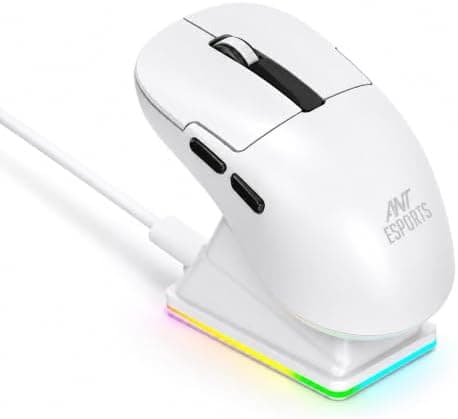
Ant Esports GM810 PRO V2 Wireless Gaming Mouse with RGB Dock
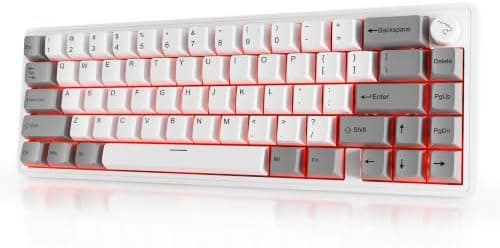
Rogue 65% Wireless Mechanical Gaming Keyboard Gasket Mount